Restirn RV-002
Restirn RV-002
Classification Type:
Partial Facial Formation — Monocular Sovereign-Class Anthropomorphic Anomaly
Discovery Location:
Classified Zone — Consolidated Shoreline Sediment Formation
Condition:
Specimen is exceptionally well preserved with a remarkably smooth exterior compared to the majority of archived formations. Surface weathering is minimal, allowing the primary facial geometry to remain clearly defined. Minor natural abrasions and subtle erosion marks are present but do not significantly disrupt the overall structure.
Observation Status:
Priority Archive Specimen — Active Observation
Perceived Features:
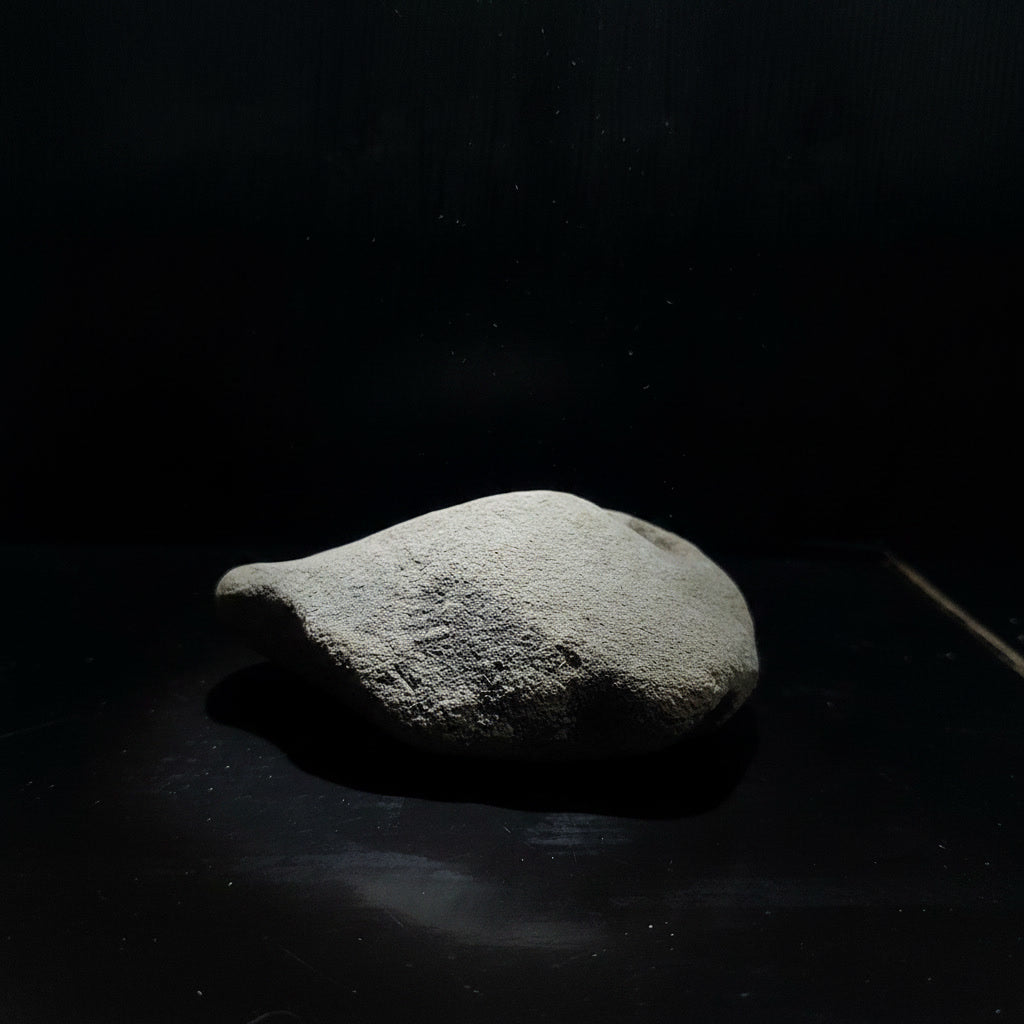
The specimen presents an exceptionally distinct half-face formation dominated by a single, deeply recessed ocular cavity positioned high within the cranial structure. The eye appears naturally proportioned and occupies the expected anatomical location, creating immediate facial recognition despite the absence of a second visible eye.
Beneath the ocular region, a prominent nasal formation extends naturally from the facial plane. A clearly defined nostril indentation remains visible, reinforcing the impression of an intact nose that has experienced only minor deformation through natural erosion.
The lower facial region terminates in a narrow, closed mouth formation that contributes to a calm yet imposing expression. The elongated facial proportions and tapered jawline produce a silhouette unlike typical human anatomy, suggesting a broader cranial structure and an unusually refined profile.
Unlike many specimens within the archive, the surface is notably smooth, with very little visual noise. This lack of heavy pitting allows the facial contours to dominate, giving the specimen an unusually lifelike presence under directional lighting.
Overall, the specimen conveys the appearance of a composed, authoritative figure. Its refined geometry, preserved facial proportions, and distinctive cranial profile make it one of the most visually striking partial facial formations currently documented within the Rockveil Archive.