Eryxil RV-006
Eryxil RV-006
Classification Type:
Partial Facial Formation — Expressive Monolithic Variant
Discovery Location:
Classified Zone
Condition:
Specimen remains well preserved with a relatively smooth exterior surface. Minor weathering is present throughout the formation, consisting of scattered micro-cavities, shallow depressions, and isolated surface imperfections. Structural integrity is high with no major fractures or significant erosion damage observed.
Observation Status:
Active Observation
Perceived Features:
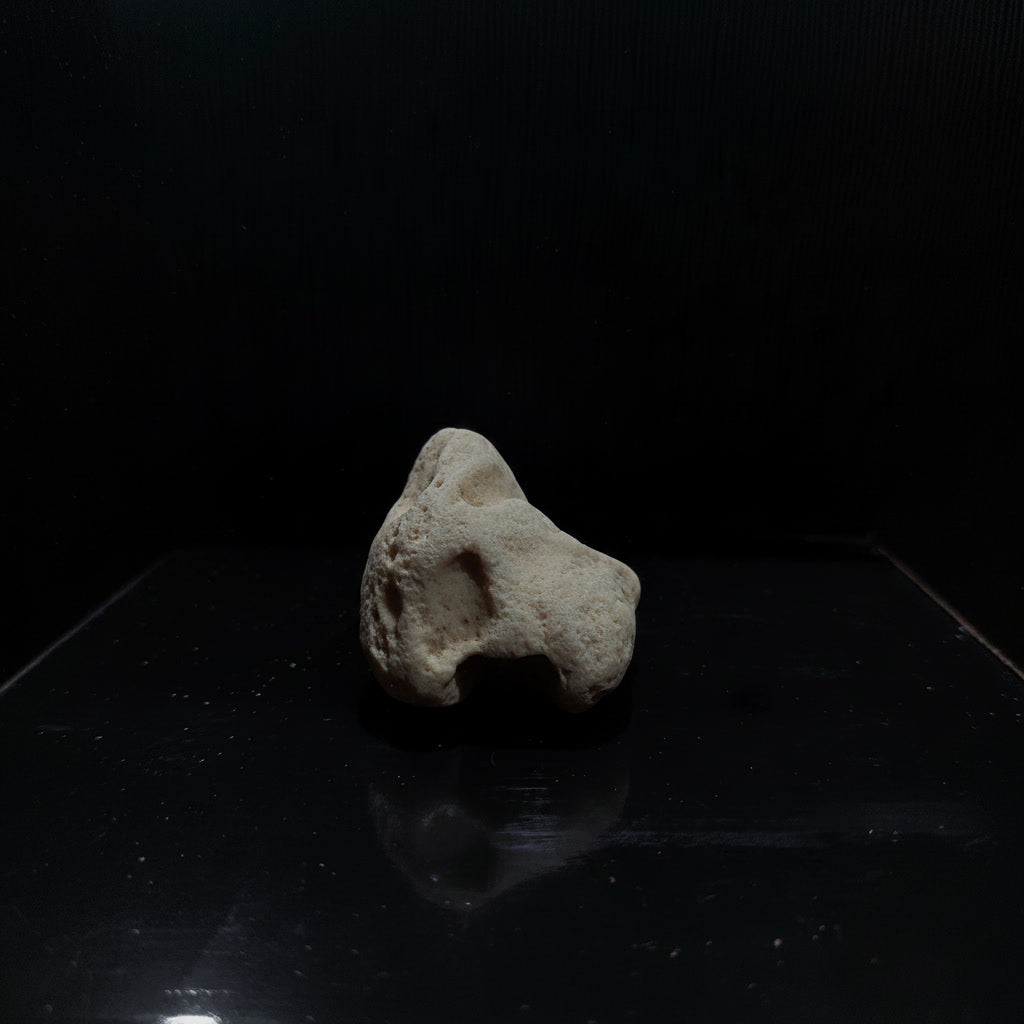
The specimen presents a highly recognizable facial arrangement despite its compact size. Two distinct ocular cavities occupy the upper facial region, each displaying an unusual vertical orientation rather than the more commonly observed horizontal formations documented elsewhere within the archive.
The central facial region contains little evidence of a fully preserved nasal structure. Any original nasal geometry appears to have been significantly reduced through natural weathering, leaving only subtle contour variations between the ocular and oral regions.
The mouth is exceptionally prominent and forms the dominant feature of the specimen. Its wide, open appearance creates the impression of excitement, curiosity, or amusement rather than the stern expressions observed in many other classified formations. This unusual expression gives the specimen a notably approachable visual character.
The right cranial region extends further outward than the left and contains a raised protrusion that alters the overall head shape. This asymmetry contributes to a unique silhouette while remaining consistent with the specimen's broader facial geometry.
Surface texture is comparatively smooth with only scattered holes, minor pits, and isolated weathering marks visible across the facial plane. The cleaner surface allows the primary facial features to remain highly visible under directional lighting.
Overall, the specimen conveys a distinctly animated appearance. The vertically aligned eyes, oversized open mouth, and asymmetrical cranial structure combine to create one of the more expressive and visually approachable entities currently recorded. Its unusual character contrasts sharply with the more severe and battle-worn formations documented elsewhere in the collection