Cryte RV-013
Cryte RV-013
Classification Type:
Full Facial Formation — Bio-Inclusion Variant
Discovery Location:
Classified Zone
Condition:
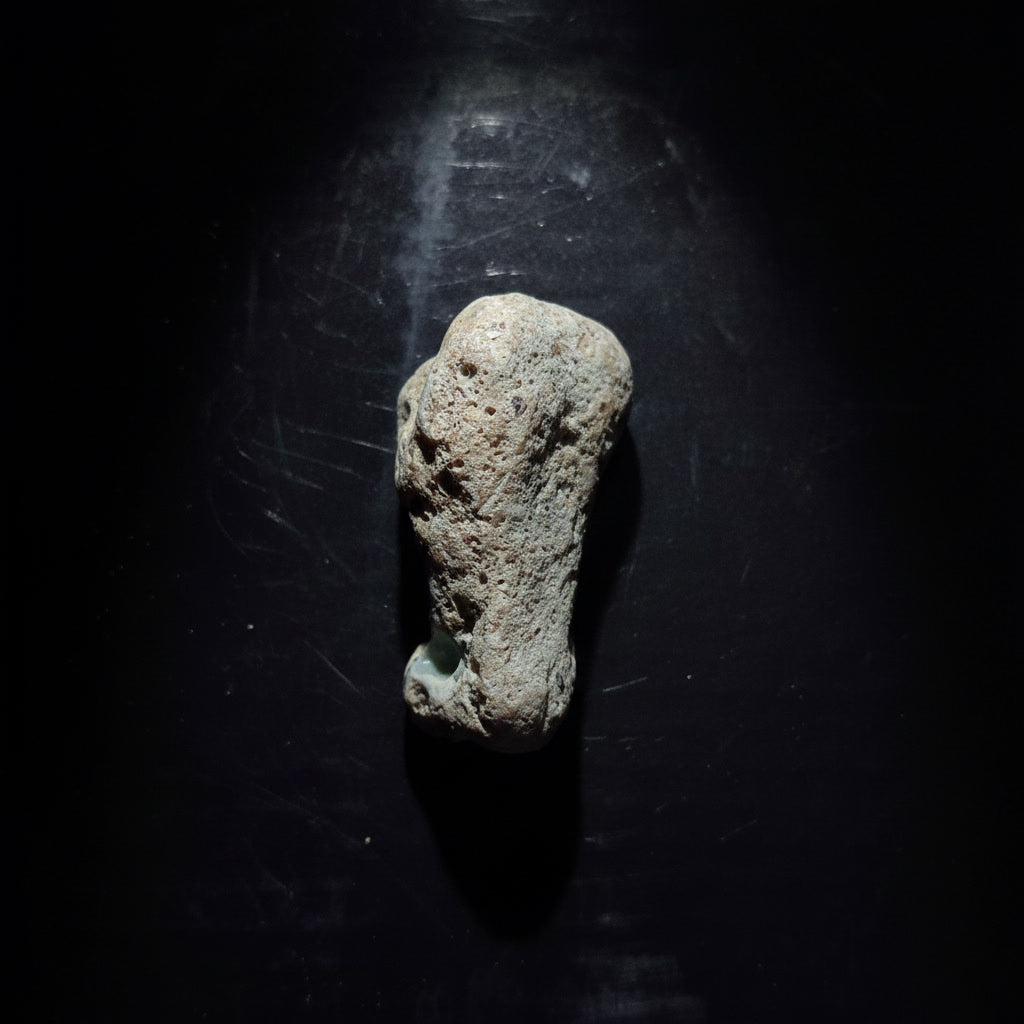
The specimen is exceptionally well preserved despite its relatively small size. Surface weathering is moderate, with numerous natural cavities, rounded erosion pockets, and fine mineral pitting distributed across the facial structure. Two mineralized shell inclusions remain securely embedded within the specimen, indicating long-term natural integration rather than recent attachment. No significant structural fractures are observed.
Observation Status:
Active Observation
Perceived Features:
This specimen displays one of the most unusual facial formations currently documented within the Rokveil Archive. Although smaller than most recorded entities, its facial proportions remain remarkably complete, featuring two ocular formations, a subtle nasal protrusion, and a pronounced open mouth.
The most distinctive characteristic is the presence of two naturally mineralized shell inclusions. The right ocular cavity contains a hardened shell that has become permanently fused within the rock matrix, creating the appearance of a preserved eye. A second shell occupies the oral cavity, producing an unusually defined open-mouth formation unlike any other specimen documented to date. Both inclusions appear to have undergone complete mineralization, becoming integral components of the specimen over an extended geological period.
The left eye presents as a naturally formed cavity positioned slightly lower than the right, contributing to a mildly asymmetrical but highly expressive facial arrangement. Between the eyes, a small raised protrusion suggests the remains of a nasal structure, with subtle surrounding contours reinforcing the impression of a partially preserved nose.
The cranial surface is densely textured with numerous rounded cavities, shallow pits, and erosion pockets of varying sizes. Despite this extensive weathering, the facial geometry remains exceptionally clear, with each primary feature retaining strong visual definition.
Overall, this specimen represents one of the rarest formations within the archive due to the presence of naturally mineralized biological inclusions. The integration of shell material into both the ocular and oral regions creates a uniquely preserved facial structure that distinguishes it from every other documented specimen, making it a highly significant entry within the Rokveil Archive.